What’s the Right Menstrual Product for You?

Whether you’re just starting to menstruate, or have been at it for a while, it’s useful to check in with which products might help you absorb blood, protect your clothes, and carry out your regular daily activities with confidence.

While choosing the right one is largely up to the individual, there are several menstrual products you may want to consider. 

Sanitary Pads

Sanitary pads are attached between your vulva and your underwear, absorbing menstrual blood as it leaves your body. 

“The average sanitary napkin comprises 48% fluff pulp, 36% PE, PP and PET [plastics], 7% adhesives, 6% superabsorbent and 3% release paper,” according to the experts at Science Direct. They come in a variety of thicknesses, sizes, and lengths, and some even include additional adhesive “wings,” which wrap around the edges of your underwear. 

The International Planned Parenthood Federation cautions that “due to their disposable nature they’re not the most environmentally-friendly option, as they must be changed roughly every four hours to prevent bacteria growth and odor.” For those with the expense and the environment in mind, there are now several reusable, washable versions available, as well. 

Tampons

Tampons are a single-use product inserted into the vagina (with or without a plastic or cardboard applicator) to absorb blood and block leakage. Regulated by the FDA, they are made of cotton, rayon, or a combination of the two. Though they can’t get lost inside your body, tampons should be changed every 4  to 6 hours, to prevent bacteria growth and toxic shock syndrome

“Getting the hang of inserting a tampon can definitely take some time and practice,” Seventeen acknowledges, but your gynecologist can provide consultation if you’re having persistent difficulty. 

Believe it or not, tampons were used for general medical practice to stop bleeding in deep wounds or administer medicine to the vagina, before they were used for periods.

Menstrual Cup

A bell-shaped container made of silicone or latex rubber, a menstrual cup is inserted into your vagina to catch blood and block leaks. Invented in 1867, menstrual cups are decades older than the modern tampon. 

“Advocates for menstrual cups say the product is the future of period care—” Popular Science writes, “but few realize that the innovation is no secret at all.” 

As with any menstrual product, there’s a list of pros and cons to using a menstrual cup. Many users like that the disposable versions of the menstrual cup provide mess-free sex. Others feel there is some trickiness of removing it and finding the right fit. Only you can determine whether this option is a good one for you.

Period Underpants

Like washable pads, period underpants are intended to be washed and reused. Made of fabric designed with microfilaments that absorb blood and odor, they protect both your skin and whatever else you’re wearing.

Designed in a variety of brands, cuts, colors, and styles, there are plenty of options to suit your taste. These underpants can be worn alone or used in tandem with tampons or pads depending on your flow and comfort level. 

Morgan Fargo, digital fitness writer for Women’s Health warns, however: “If you don’t like blood, period underwear might not be one for you. Unlike tampons or pads where you dispose of them fairly quickly, period underwear requires some wringing out before it goes in the washing machine.” 

As you can see, finding the right menstrual product(s) is largely up to you. Feeling comfortable and confident is as important as maintaining a healthy and regular cycle. To monitor your menstrual health, or speak to one of our experts about menstrual product selection, book an appointment online or call 770-385-8954. 

To Shave, Or Not to Shave, Downstairs

Attitudes toward pubic hair grooming have, well, grown throughout the ages. Brazilian? Natural bush? A neatly trimmed triangle or abstract geometrics? These days it seems you can do just about anything with your pubic hair—but should you? And if so, how? 

Understanding the Importance of Pubic Hair

Before you decide to remove even a single hair, let’s look at why they’re down there in the first place. Most medical professionals will tell you something similar. “It provides a cushion against friction that may cause skin injury, prevents dirt and bacteria from entering the vagina, and can help to spread pheromones [the chemicals we excrete to entice potential partners] and reduce heat loss,” Mamta Mamik, M.D., associate professor of obstetrics, gynecology, and reproductive science at the Icahn School of Medicine at Mount Sinai, said at SELF

In general, pubic hair can serve a similar function to eyelashes or nose hair by trapping potentially harmful microorganisms and protecting delicate tissue. In addition, as Healthline points out, hair follicles produce sebum, an oil that prevents bacteria from reproducing. As a result, some believe pubic hair may help protect you from some STIs and STDs, though a few small studies contradict this theory.

In general, however, pubic hair is there for a reason — to protect your vagina from harm.  

How Dirty Is It?

You may come across opinions that having pubic hair might be “unhygienic,” which is certainly not a unique perception. 

“The Greeks and Egyptians idealized hairless bodies. Shaving and epilation techniques were commonly used . . .,” a 2013 article in the Journal of the American Academy of Dermatology explains. “This was generally felt to be a result of common infestations of body hair with parasites and the sense that a body without hair was cleaner.” 

While it’s true that body hair can help absorb extra sweat (and possibly bacteria)—even “down there,” thanks to easy access to clean water and seemingly more soap and cleansing products than there are soap bubbles, modern women needn’t be as concerned as ancient Egyptians or Greeks about hygiene. 

As SELF magazine puts it simply: “Bottom line: If you’re clean, your pubes will be, too. If you’re not, a Brazilian isn’t going to help you.”

The Straight on Using a Razor

As a 2019 study published in the Journal of Sexual Medicine indicates, nowadays pubic hair removal “seems strongly associated with personal, partner-related, sexual, and relational factors.” Personal aesthetic preference and comfort may also come into play. 

If trimming, shaping, or removing your pubic hair is of interest to you, discuss the health pros and cons with your own gynecologist. They can help explain the safety and risks of the two most popular methods: shaving vs. waxing, including the dangers of cuts, skin damage, folliculitis, or other infections.

If you must shave, there are ways to do it right, as Anna Klepchukova, MD, Chief Science Officer at Flo recommends: “To make the shaving process more effective and minimize irritation, first exfoliate your skin with a scrub. Use creams with natural moisturizing elements (e.g., aloe). Don’t use anyone else’s razor, and shave the hair in the direction of its growth. Finish up by rubbing your skin with an ice cube to close pores. Then, in half an hour, moisturize with a lotion.”

At Covington Women’s Health Specialists, we want to help keep your pubic hair and everything else both happy and healthy. Arrange an appointment with us online or call 770-385-8954.

Covington Women’s Health Specialists Sponsors and Speaks Out at Pink-Out Concert

On October 1, 2021, Covington Women’s Health Specialists had the honor of sponsoring the Pink-Out Concert, a free performance for everyone to enjoy at Legion Field. The annual Pink-Out Concert is put on by the Community Arts Association in Newton County to encourage community support of Breast Cancer Awareness Month every October.

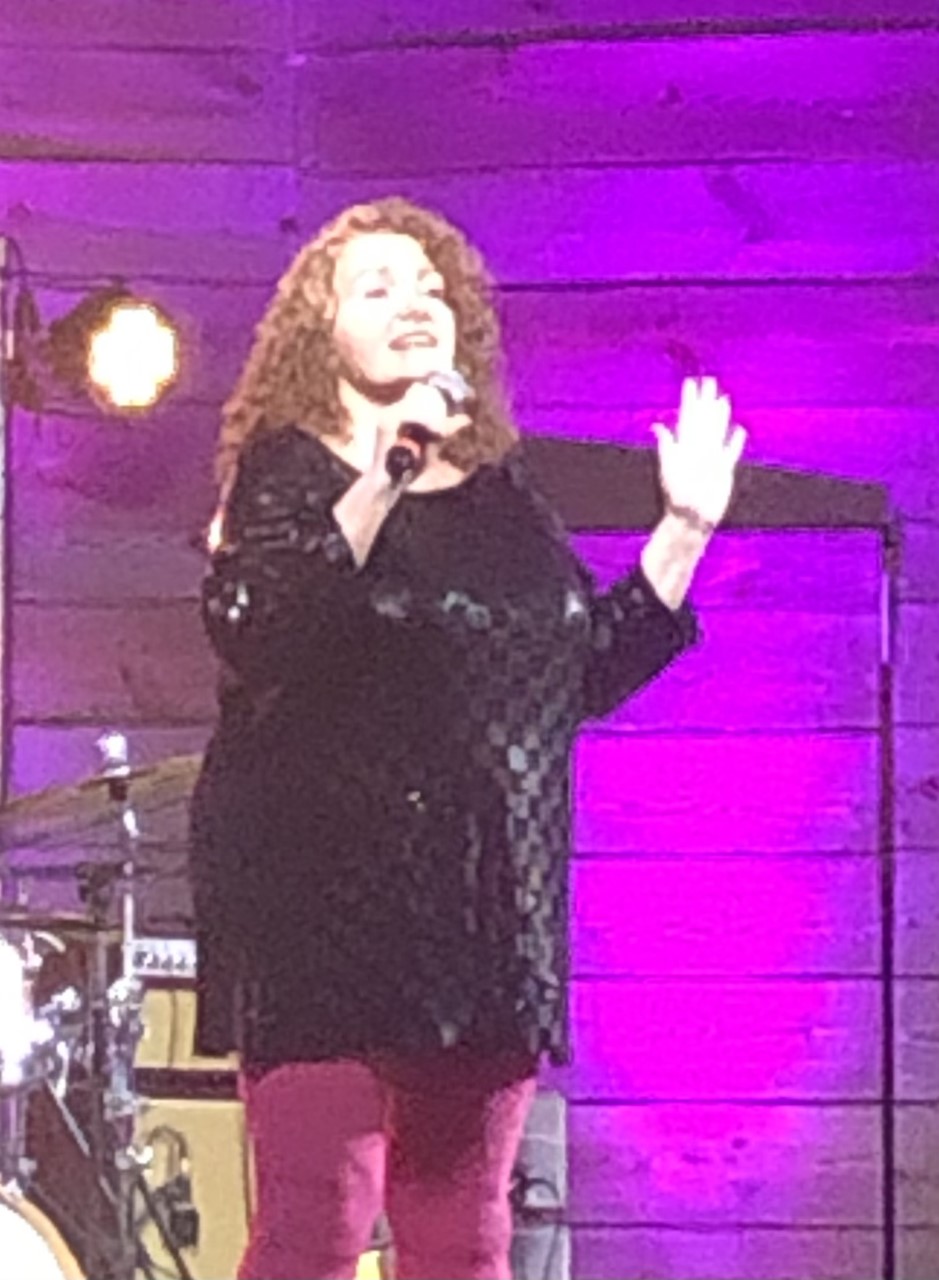
Ruby Velle & The Soulphonics had a terrific performance! After Ruby belted out a dozen tunes while dancing around the stage, she told us that she had a baby a few weeks ago! What a strong and talented woman!

Dr. Cathy Larrimore, Terri Terry (surgical assistant), Whitney Mitchell (medical secretary) and Bailey Stewart (medical assistant) had the opportunity to attend and see around 300 guests, including current patients. Our practice donated a Lightbox pink diamond necklace to the event’s fundraising raffle that benefited the HOPE Boutique of the Women’s Diagnostic Center.

Dr. Larrimore had the opportunity to speak and discussed the importance of mammograms and pap smears for patients. Here are some highlights from Dr. Larrimore’s words at the event:

  1. Because it is a lifesaving tool, a screening mammogram is the ONLY test that a patient can schedule for themself without a doctor’s order.  If you, a family member, or a friend is due for a mammogram or are over age 40 and have never had one, please spread the word about getting this important test!
  2. Pap smears are still important! Don’t think that you don’t need a Pap because that’s what you read in a fashion magazine or heard on the news!  Please come in for a screening GYN exam at our office or your own GYN, and discuss your personal GYN care with a women’s health provider!
  3. Bleeding after menopause is a cancer warning sign! After menopause, periods are abnormal! Please call your GYN if you have bleeding after menopause or if your periods “re-start.”
  4. EVEN if you have “had everything removed,” you still need a GYN! Primary peritoneal cancer is a rare cancer that can occur in women,(even if their ovaries have been removed!) and in men. This rare cancer mimics ovarian cancer. So, EVERYBODY needs to know these vague symptoms:
  • Early feeling of fullness after eating, feeling bigger around the middle
  • Bloating and when severe, nausea and vomiting may result
  • Urgency of urination or changes in urinary habits
  • Changes in bowel habits
  • Unexplained back pain
  • Abdominal pain

If you think most of these symptoms are gastrointestinal rather than GYN in nature, you are right! In addition to calling your regular doctor or your GI for an appointment, please call your GYN, too! Months can be lost if you only focus on the GI tract.

Make an appointment with Covington Women’s Health Specialists today.

Sex Health Series: The Key to Great Sex? Great (and Healthy) Communication

“Though talking about sex can feel a little scary,” pros at the American Sexual Health Association acknowledge, “it can also be incredibly sexy, even if you both have your clothes on.” 

Healthy communication not only conveys accurate information but as Steven Benbow at Awkward Silence reminds us, it can also:

  • Give you a sense of growth and challenge
  • Spark ideas and motivation
  • Provide affirmation
  • Increase your attractiveness
  • Heal and repair arguments
  • And — perhaps most importantly —create connection.

When it comes to sex, good communication will also help you feel confident, safe, respected, and secure.  

Prepare Your Speech

Most sex-related topics aren’t necessarily the kind you should address just as you’re getting undressed. “Think about [subjects] ahead of time, and discuss them with a partner when you are not currently in a sexual mood,” advises IWannaKnow: Sexual Health For Teens and Young Adults. It’ll be far easier to talk about condoms, for example, well before one of you is ready to put one on.  

Categories to Consider Addressing up Front

Pleasures & Desires

You can’t always get what you want, but talking about it may get you closer. Clear communication with yourself about what you like and want will make it much easier to convey your desires to your partner(s) when the time comes. Consider exploring on your own with safe sex toys for a boost in this department. 

STI Safety

Though you may be shy about sharing about sexually transmitted infections (STI) — both your own test results and how to protect against infection — STIs are far more common than you think. We shared some advice about breaking STI stigma because conversations around STIs can be one of the best methods of protection. 

Birth Control

“Having a conversation with your partner about birth control is a good way to learn of [their] interest in participating in the process, which can also be an opportunity to assess if [they are] a good choice as a sexual partner,” remind the birth control contributors of Our Bodies Our Selves. If you’re uneasy talking together about the prevention of parenthood, what might happen should you become parents? 

Boundaries & Consent

Similar to knowing what you want and desire, knowing where your firm limits are will help establish a healthy sexual relationship. First, be honest with yourself about your boundaries. Next, take the time to communicate about them with your partner (before anything happens).  For a quick and easy way to bow out at any time, you and your partner might consider establishing a safe word together. 

How To

Still feeling tongue-tied? The American Sexual Health Association has an abundance of tips that will help you start (and continue) a positive conversation about your passions. Don’t forget that communication doesn’t have to simply be about sex, either. Dirty talk can also heighten the experience and your connection. 

We at Covington Women’s Health Specialists are dedicated to your entire well-being — sexual and otherwise. For more personalized advice and conversation, book an appointment with us online, or call 770-385-8954.

Third Time’s the Charm: A Patient’s Experience Delivering Her Third Child

Mother-of-three and local restaurant owner Sasha Stone understands the impact of creating a balance between the allure of a big city with the comforts of community. At her family’s restaurant, City Pharmacy, Sasha and her husband strive to create a place “Where Friends Meet” through a unique setting that honors the history of Covington while highlighting a unique, fresh dining experience. 

When Sasha had a preference of where to deliver her third child, Birdie, it is no surprise she selected the personalized and high-quality care provided by the local birthing experts at Covington Women’s Health Specialists. Sasha’s understanding of the value of neighborhood support and community at City Pharmacy enabled her to appreciate the sincerity and compassion of Dr. Meridith Farrow, an OB/GYN with Covington Women’s Health Specialists. As a doctor and patient who both hail from Covington, their bond deepened because of their common experiences as local community members. Sasha received exceptionally attentive and individualized care from Dr. Farrow during emergency surgery and her third pregnancy. She will never forget it.

When Sasha first married, she and her husband lived close to downtown Atlanta. She became pregnant with her first baby, Moody, shortly after they had relocated back to Covington to be closer to family.

“I had been living in the city so I went to a hospital in the city to deliver my son. I thought I needed to deliver at a big, city hospital in order to be comfortable and safe,” Sasha said. “It wasn’t a bad experience, but it was definitely not a personalized or unique experience.” 

As Sasha neared her due date, her doctor encouraged her to consider inducing labor. While this was not necessarily the birth plan she had in mind, she admits that she hadn’t thought too much about a birth plan so she deferred to her obstetrician.

“About an hour after they induced labor, my heart rate and my baby’s heart rate dropped,” Sasha remembers. “They changed the medication they were giving me and I went on to labor for another seven hours before my labor stalled. After 10 hours, the doctor came in to talk to me about doing a C-section.”

Before moving to a C-section, Sasha asked if she could try to deliver naturally. Her doctor agreed to let her try, but the baby’s heart rate dropped, again, and she was immediately taken into surgery.

“It moved so fast, within 15 minutes, I was in the operating room and they were delivering Moody,” Sasha said. “I was so happy that he was safe and healthy, but still a little disappointed that I wasn’t able to deliver him naturally.”

Six months after her son was born, Sasha discovered she was again pregnant. Since it was so soon after delivering Moody, she returned to her physician in Atlanta for prenatal care. However, through her work at the restaurant, Sasha had met local OB/GYN, Meridith Farrow, M.D., and they had become friends.

As it got closer to Sasha’s due date, she and Dr. Farrow discussed Sasha’s scheduled C-section and her disappointment in not being able to deliver her second son, Hyde, naturally. Dr. Farrow encouraged Sasha to talk to her physician about attempting vaginal birth after cesarean (VBAC), but when she asked her doctor about it, he told her he did not perform that type of delivery.  

“I wasn’t thrilled that I was having another C-section, but I also knew that there were risks, so I didn’t push the issue,” Sasha said. “But, I do remember wondering why he wouldn’t at least take the time to talk to me about my options and what I was thinking about like Dr. Farrow was doing, and I wasn’t her patient! It was then that I finally understood what I had felt during Moody’s delivery and now this baby’s…rushed. I felt like the hospital and the doctors were on a schedule and needed to move things along to make room for the next patient. They were very kind and considerate, but there was a lack of warmth due to the rate at which they were moving me through the process.”

Local Comfort

A year and a half later, the Stones decided they wanted to add to their family. Sasha became pregnant, but within a few weeks began to have bleeding that caused her alarm. Although she and Dr. Farrow had a deep friendship, Sasha was not her patient, so she called her Atlanta doctor’s office. The doctor spoke with her over the phone and diagnosed her as having a chemical pregnancy, sometimes called an early miscarriage, which is a pregnancy where a fertilized egg does not fully implant in the uterus.

“Although I wasn’t very far along in the pregnancy, it made us sad that I had miscarried,” Sasha remembers. “But, with two boys under the age of four at home, I knew how blessed I was and that the sadness would pass.”

A week later, Sasha’s bleeding had not subsided and was continuing to worsen. She was out of town when she began to experience terrible abdominal cramps that left her unable to walk. She was finally able to reach an on-call physician with her Atlanta doctor’s office who told her to go to the closest emergency room.

Scared and in tremendous pain, she called her friend, Dr. Farrow. After speaking with Sasha and the ER physician, Dr. Farrow ordered Sasha to be transferred and admitted to our local hospital, Piedmont Newton Hospital.

Dr. Farrow quickly discovered that Sasha had an ectopic pregnancy that had ruptured and that she needed emergency surgery. Prior to going into surgery, Dr. Farrow spoke with Sasha about the risks and possible outcomes. Knowing that the Stones wanted more children, Dr. Farrow said she would do everything she could to save the ovary but that she couldn’t make promises.

“Even though I was in a situation that was serious enough to require emergency surgery, Dr. Farrow and other members of the staff took the time to talk to me, answer my questions, and make sure that I was comfortable with the plan of care,” Sasha said. “They displayed so much compassion and care for me and my husband.”

Sasha’s surgery was successful and Dr. Farrow was able to save her ovary. She recovered well and, a short time later, was able to get pregnant again. This time, there was no doubt in her mind who would be taking care of her and her baby, Dr. Farrow with Covington Women’s Health Specialists. During this pregnancy, Sasha found great comfort knowing she could rely on Dr. Farrow and have a positive birthing experience at a local hospital.

The pregnancy progressed smoothly and Sasha scheduled her C-section, but a week before she was scheduled to deliver, she began having contractions. When she got to the hospital, she told the nurses about her scheduled C-section, but she was admitted to a regular labor and delivery room until she could be examined by Dr. Farrow.

Confirming that Sasha was in active labor, Dr. Farrow asked if Sasha wanted to attempt to deliver via vaginal birth after cesarean (VBAC). She knew that Sasha had wanted to have her other children naturally, and wanted to give her the opportunity to do so safely. They agreed that Sasha would try to deliver naturally, but that Dr. Farrow would halt everything and move her to the OR if there were any issues. Fifteen minutes later, Birdie Stone, the Stone family’s third child and only daughter, was born. 

“I was overcome with emotion,” Sasha said. “Our daughter was perfect and beautiful and there were no complications. Once I had time to reflect on things, I was just so grateful that Dr. Farrow approached my pregnancy and delivery with an open mind and really took the time to understand what was important to me.”

Covington Women’s Health Specialists provides the balance of high-quality clinical care with the comforts of local service.

“You think you have to go into Atlanta to have a good experience, but, in fact, by doing so you are missing out on having the best, most personal experience,” Sasha said. “There is no better care than local care and having everything you need right next door. The doctors and staff at Piedmont Newton want for you what is important to you. They want to make you feel like family.”

Are you an expecting mother looking for family-like OB/GYN care? We’re happy to help. To learn more about the Covington Women’s Health Specialists experience, please call 770-385-8954 to speak to our team, or click here.